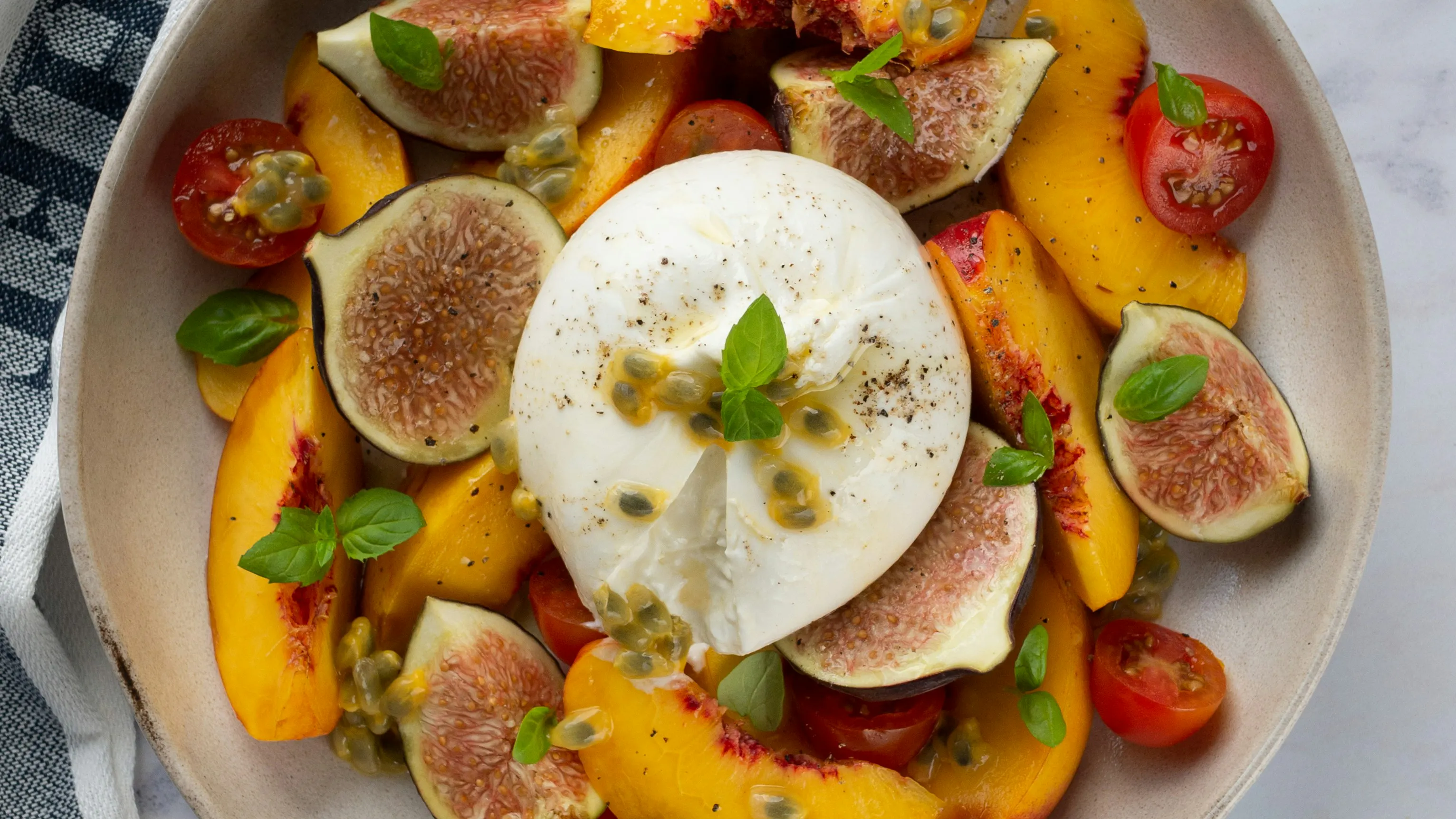
Some cheeses win us over with their flavor, while others offer a small surprise in addition to taste: burrata is one of them. Simply cut into its smooth, snow-white surface to witness a small spectacle: the outer shell slowly opens and releases a creamy, velvety center. A heart that contains all the magic of Puglia’s dairy tradition, built on ingenuity, simplicity and a deep love for milk.
What is burrata and why is it called that?
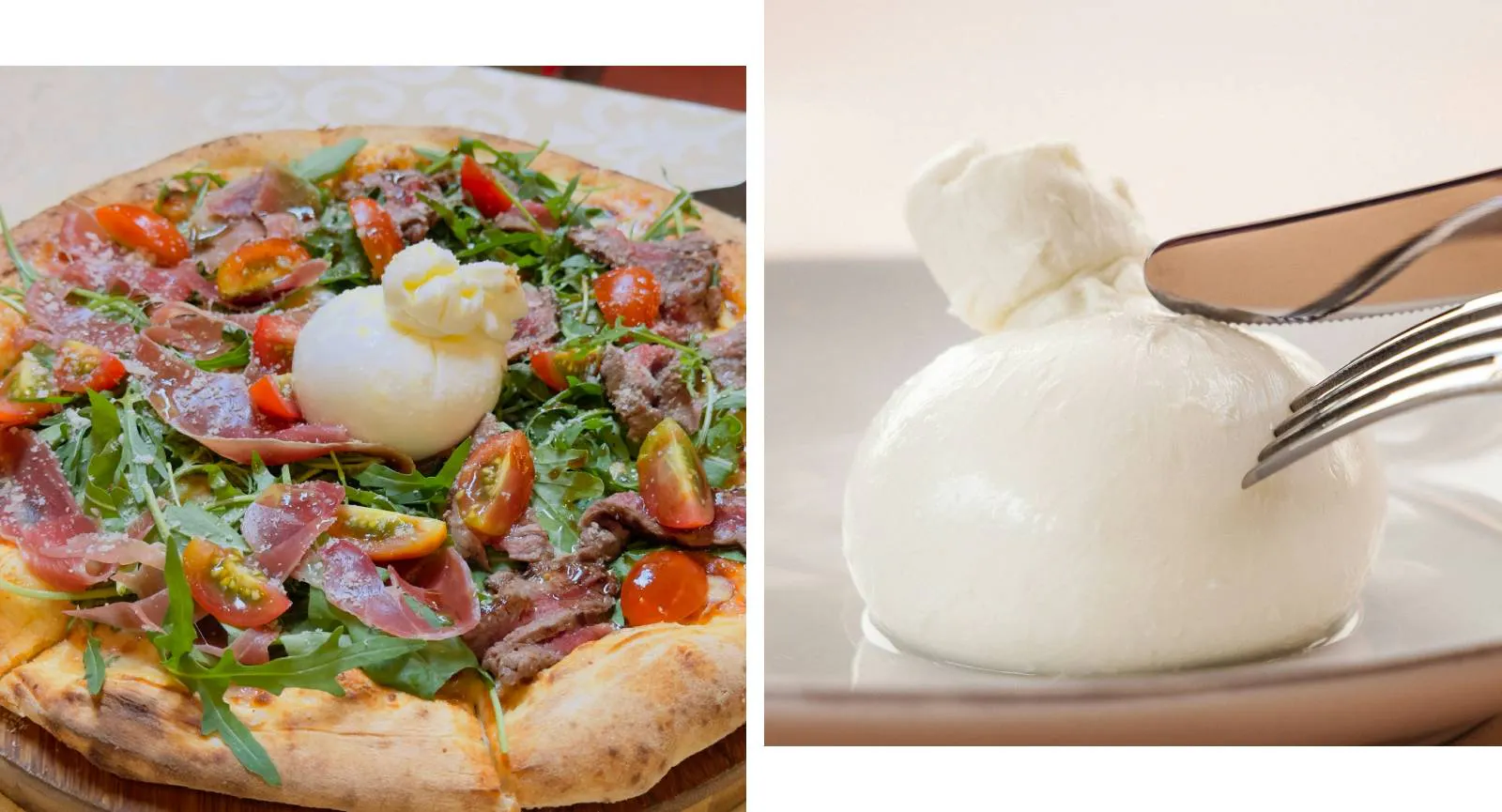
Burrata is a fresh stretched-curd cheese made exclusively from cow’s milk (although versions made with buffalo milk can now also be found). It looks like a small pouch made from a sheet of stretched curd similar to the one used for mozzarella and traditionally tied with a raffia string. Inside this outer layer lies its most distinctive element: stracciatella, an irresistible filling made from thin strands of stretched curd, the so-called “stracci”, mixed with fresh cream. The result is a rich, enveloping and incredibly delicate cream.
The name “burrata” comes from its soft, buttery texture, reminiscent of butter while still preserving the freshness typical of newly made dairy products. Its flavor is delicate, milky and balanced, capable of winning over even the most demanding palates.

Cesarine experiences with Burrata
Discover and enjoy this Puglian specialty by taking part in one of the many Cesarine experiences: you’ll be able to taste burrata in traditional dishes, learn how to make the most of it in the kitchen and share an authentic moment of conviviality around the table.
Origins: a story born out of necessity
Burrata originates from Puglia, and more specifically from the area around Andria. In 2016 it received IGP status.
Unlike many traditional Italian cheeses, its history is relatively recent. The most widespread story tells that it was created in the early decades of the twentieth century thanks to the ingenuity of cheesemaker Lorenzo Bianchino in Castel del Monte.
During a snowy winter day - some accounts place the story in the 1920s or 1930s, while others date it to the winter of 1956 - heavy snowfall prevented the transport of fresh milk from the farmsteads to nearby towns. To avoid wasting the day’s precious milk, the cheesemaker had a brilliant idea: to reuse the leftovers from mozzarella production.
Those small strands of stretched curd left in the processing water, the so-called “stracci”, were mixed with fresh cream, creating stracciatella. The mixture was then enclosed in small pouches made from the same stretched curd used for mozzarella. This is how burrata was born: a product that turned leftovers into a true gastronomic excellence. The idea was also inspired by the tradition of manteche, aged stretched-curd shells used to preserve butter inside them. The Bianchino family applied the same principle but created a fresh and incredibly indulgent product.
Traditional packaging
In the past, burrata was packaged in a very distinctive way: each piece was wrapped in asphodel leaves, a wild plant typical of the Murge plateau.
Besides creating an elegant color contrast with the white cheese, the leaves also had an aromatic and practical function: they indicated the freshness of the product. As the days passed, the leaves would wither, signaling that the burrata should be eaten as soon as possible.
How to enjoy burrata at its best
Burrata is a cheese that is best enjoyed when it is very fresh. Its flavor remains intact only for a few days after production.
Ideally it should be eaten on the same day it is purchased. If it is stored in the refrigerator, it should be taken out at least one hour before serving so that it can return to the right temperature and fully express its creaminess.
The simplest way (and perhaps the perfect one) to enjoy it is on its own, maybe with a drizzle of extra virgin olive oil and some good bread.
But burrata is also incredibly versatile in the kitchen. It can be used to:
- finish a creamy risotto
- complete a plate of spaghetti with tomato sauce
- enrich a fresh salad
- add a delicious touch to pizza
However it is served, the moment when it is opened and its stracciatella flows out remains the same: a small, irresistible pleasure.