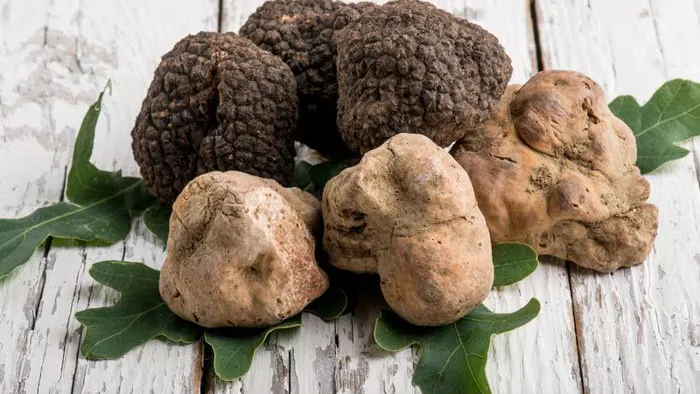
To find this elusive ingredient, you’ll need to be in the right place, at the right time… with the right dog.
Truffles are a prized ingredient in Italy, and cost thousands of euros per kilogram. The delicate, complex aroma of the truffle is a treasure locked away by Mother Nature. It’s protected by the soil, sheltered from the cold and sunshine, and sealed by a rough exterior.
Truffles are highly sought after for their distinct earthy, musky flavour and aroma. You'll find them served shaved over dishes like pasta or risotto, with about 8 to 10 grams per individual serving.
So, why are truffles so expensive?
Truffles are expensive because they're so rare. This is mainly because they're nearly impossible to cultivate: recreating the necessary growing conditions is very difficult and costly, plus it can take years to yield truffles that have any value. If you want to find them, you'll need a specially trained dog, another expensive part of the process.
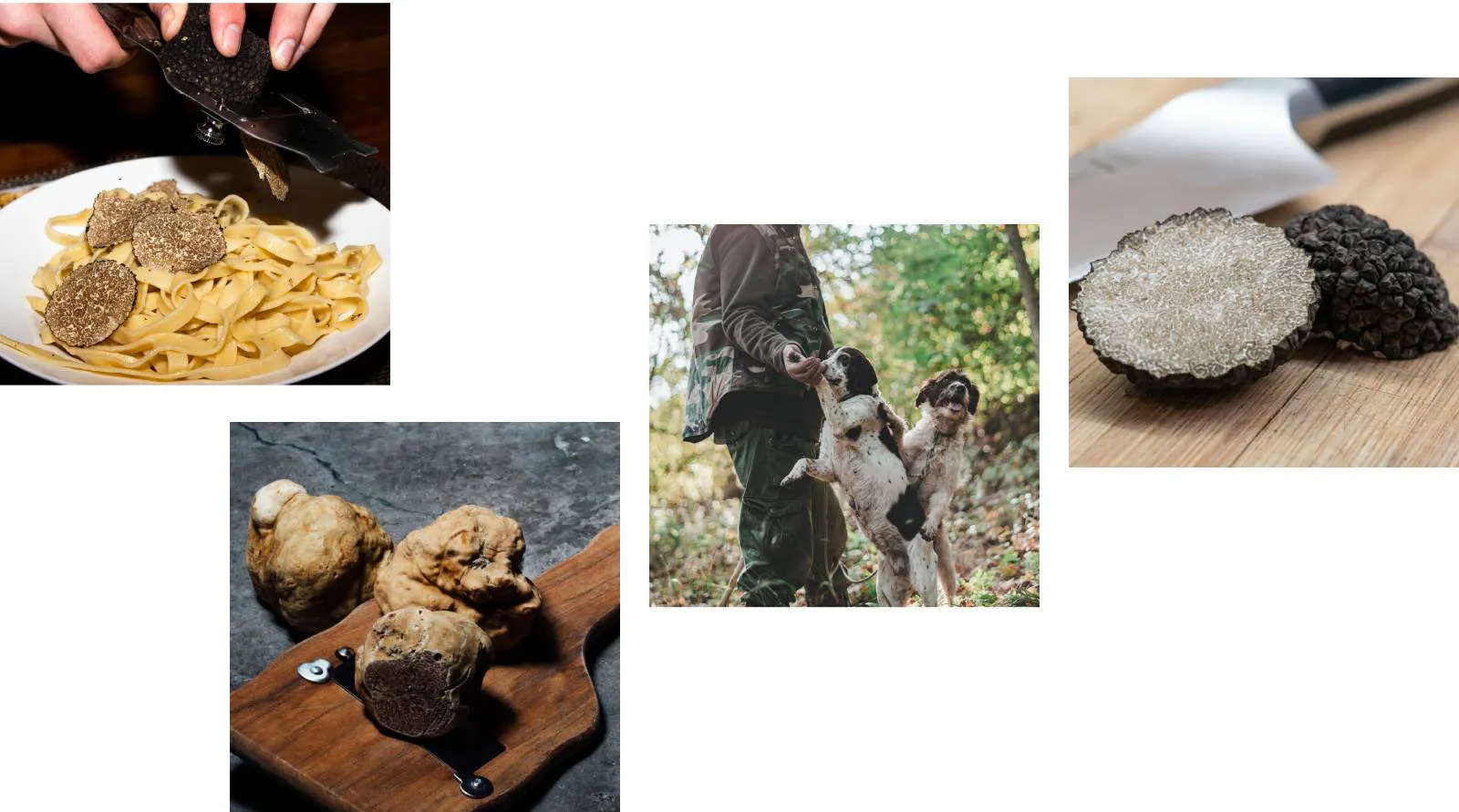
There are 3 main types of truffle in Italy
Il Tartufo Bianco/White Truffle (Tuber magnatum)
Most famously found in Alba (Piemonte), the tartufo bianco grows spontaneously near the roots of certain trees such as oak, willow and poplar, in the rich woodland soil of northern Italy in Piemonte and Le Langhe, as well as some areas of Tuscany and Molise. The tartufo bianco is found almost exclusively in Italian soil. They do not have an outer shell, so are very sensitive to environmental changes, which makes them even more rare - and expensive.
Il Tartufo Nero/Black Truffle (Tuber melanosporum)
This type of truffle is also found in France, and is also known as the tartufo nero del Périgord. It usually grows near the roots of hazelnut and oak trees, and prefers the well-drained soil of Umbria and Le Marche. The provinces of Spoleto and Norcia are particularly famous truffle hotspots.
Tartufo Scorzone/Burgandy Truffle (Tuber uncinatum)
A less intense and more common variety of truffle that can be found across Europe. It has a milder taste, similar to that of porcini mushrooms. Its exterior is similar to the tartufo nero, but its flesh will remain a creamy white colour when you cut it open, whereas the flesh of the tartufo nero will oxidise and turn black. It's important to tell them apart, as their flavour (and price tag...) are very different.

Flavors of the Underbrush
Welcome the magic of autumn with our culinary experiences starring mushrooms and truffles! Dive into the world of foraging and cooking, where you'll learn to identify seasonal mushrooms and incorporate exquisite truffles into your dishes. Cesarine will guide you through flavorful recipes that celebrate these rich ingredients.
Food Experiences
Aperitif in a truffle grove with truffle huntingHosted by Jessica
Spello
€204 per guest
Shared Experience
Food & Wine Tours
In search of the prized white truffle in the woodsHosted by Gianna
Piazze
€149 per guest
Shared Experience
5 (4)
Food Experiences
His majesty the TruffleHosted by Cinzia
Merana
€128 per guest
Shared Experience
5 (29)
Food Experiences
Specialty: MushroomsHosted by Monica
Asti
€82 per guest
Shared Experience