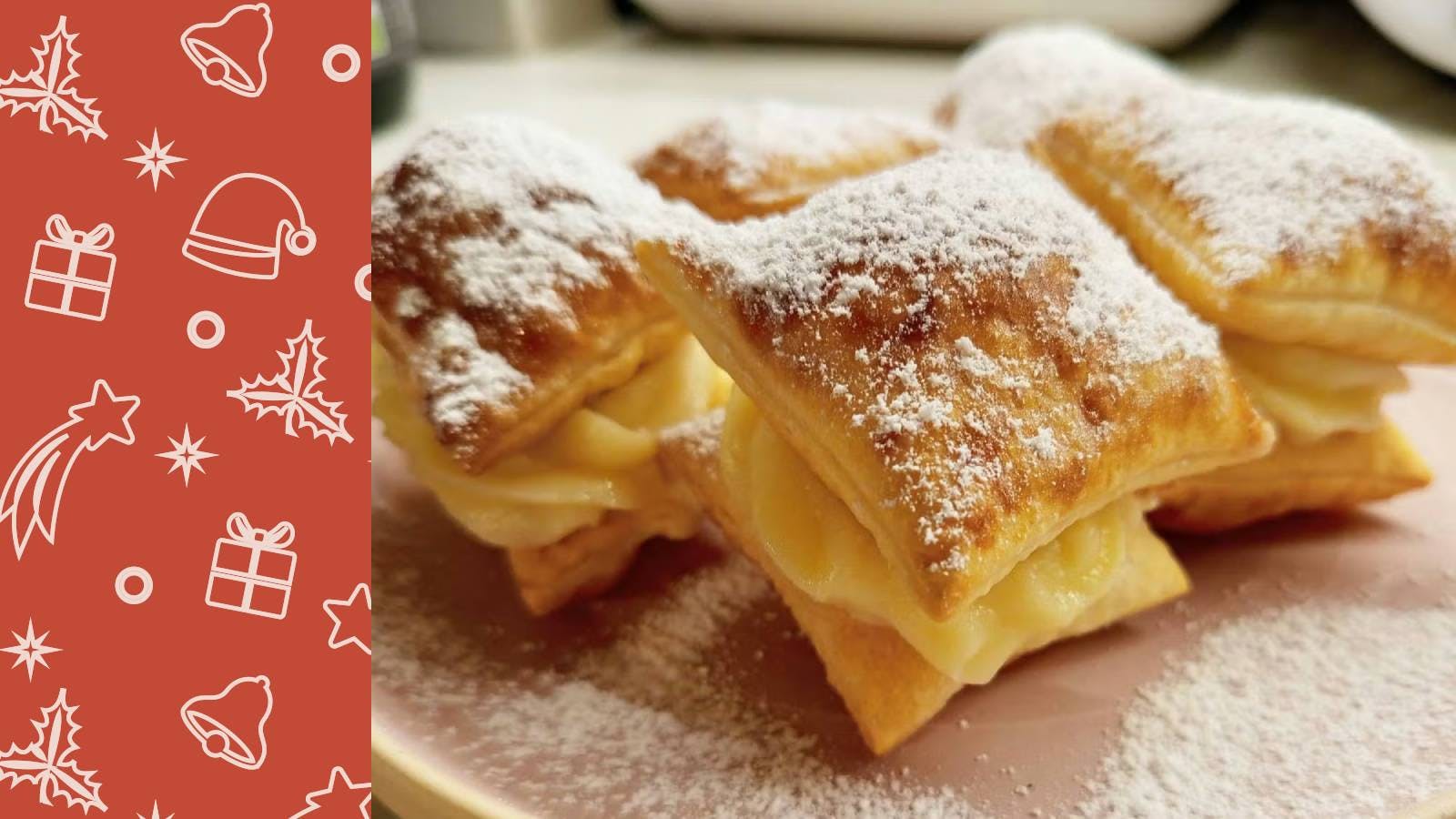
Christmas has finally arrived!
Tables are being set for the celebrations, and the delicious aroma of lunch dishes begins to fill every home. But between unwrapping one gift and the next, we might still find a little time to prepare one last dessert: simple, quick to make, yet incredibly satisfying to eat. Preparing it can even be the perfect opportunity to get the little ones involved in something fun and different… that is, if you can manage to pull their attention away from the presents Santa brought them!
The recipe we want to share with you is for Sporcamuss: traditional Puglian pastries that we’ll be preparing today together with our Cesarina Pamela from Altamura. So, what are you waiting for? Tie on your apron and bake these sweet treats to share with the friends and family who’ll be visiting during the holidays.
And while you’re busy creating your own Sporcamuss, all of us at Cesarine want to take a moment to send you our warmest wishes for a joyful holiday season!
Sporcamuss
The name Sporcamuss (or sporcamusi) comes from the Bari dialect and literally means “to dirty one’s nose.” This playful name perfectly fits these pastries, since it’s almost impossible to take a bite without ending up with your face dusted in powdered sugar!
Born in Bari’s pastry shops during the 1950s and 1960s, Sporcamuss were originally served warm on festive days. Their simplicity and deliciousness soon made them a true symbol of Puglian hospitality: small, crisp, and irresistibly “messy.”
Over time, Sporcamuss have become a real cult favorite throughout Puglia. Today, you can find them in many variations: some filled with classic custard cream, others with Chantilly cream, or even topped with fresh strawberries in summer. Yet their essence remains the same—a genuine, homemade dessert that brings smiles to both children and adults with its simple sweetness and its playful invitation to get a little messy!
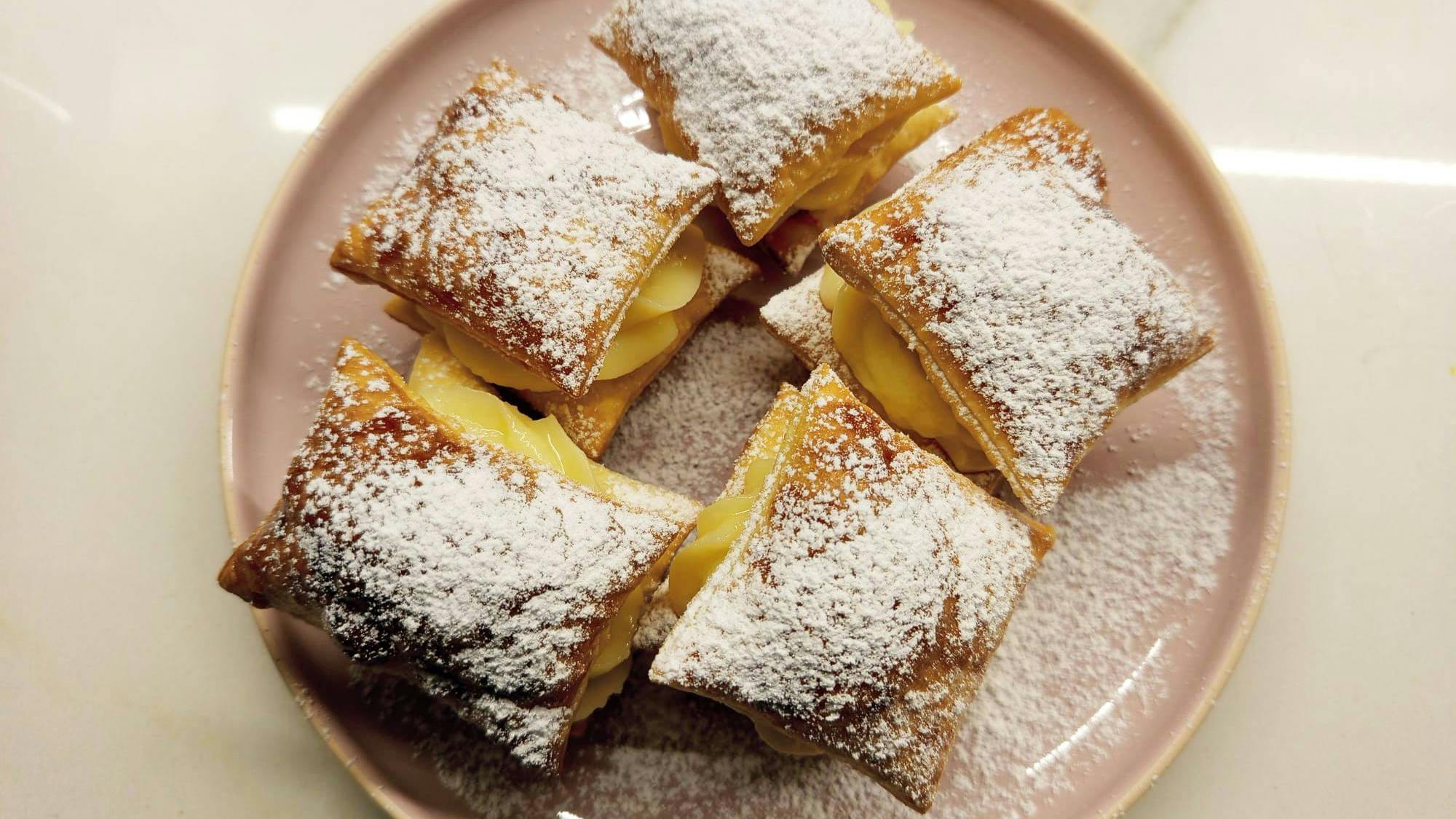
Sporcamuss
Small pastries from Bari filled with custard cream and dusted with powdered sugar.
DifficultyEasy
Preparation time20m
Cooking time15m
Servings8
€
CostLow
Ingredients
- 1 sheet of rectangular puff pastry
- 500 ml (2 cups) whole milk
- 4 egg yolks
- 100 g (½ cup) sugar
- 40 g (⅓ cup) cornstarch (cornflour)
- 1 sachet of vanilla powder or ½ vanilla bean
- Powdered sugar, as needed
Method
For the custard cream:
- In a small saucepan, heat the milk with the vanilla. In a separate bowl, whisk the egg yolks with the sugar until the mixture becomes light and fluffy.
- Add the cornstarch and mix well. Slowly pour the hot milk into the egg mixture while whisking continuously, then transfer everything back to the saucepan.
- Cook over medium heat, stirring constantly, until the cream thickens.
- Cover with plastic wrap directly in contact with the surface and let it cool completely.
Baking the puff pastry:
- Cut the puff pastry into squares about 6–7 cm (2½ inches) per side and place them on a baking tray lined with parchment paper.
- Prick the surface with a fork to prevent them from puffing up too much while baking.
- Bake in a preheated static oven at 200°C (390°F) for 12–15 minutes, until golden and puffed.
- Let them cool completely.
Assembling:
- Cut the cooled puff pastry squares in half horizontally.
- Fill the base with custard cream (or Chantilly cream, if you prefer), cover with the other half, and generously dust with powdered sugar.
- Tip: Serve them slightly warm, so the cream stays soft and the pastry remains crisp.
Taste of Christmas: winter experiences and traditions
Discover an exclusive collection of festive culinary experiences, recipes, and seasonal tips designed to make your Christmas celebrations truly unforgettable. Explore ways to enhance your holiday menu with a variety of options. Let our experiences and advice inspire you to create a warm and flavorful winter experience, celebrating the joy and spirit of Christmas.
5 (1)
Cooking classes
Christmas Special: let's prepare the holiday menuHosted by Domenico
Castiglione Torinese
€82 per guest
Shared Experience
5 (44)
Food experiences
Christmas tradition: join together for a culinary experienceHosted by Claudia
Spoleto
€72 per guest
Shared Experience
5 (35)
Cooking classes
Traditional Christmas desserts from SalentoHosted by Lucia
Lecce
€110 per guest
Shared Experience
4.9 (11)
Cooking classes
Christmas: learn the dishes of my traditionHosted by Silvia
Castel San Pietro Terme
€82 per guest
Shared Experience