
Next Wednesday, April 22, the 56th edition of Earth Day will take place.
Founded by the United Nations in 1970, following the environmental disaster that occurred the year before off the coast of Santa Barbara (California), when an oil well spilled enormous quantities of crude oil into the Pacific, this event aims to keep topics such as sustainable development, social inclusion and the protection of natural resources and ecosystems high on the public agenda.
Over the years, Earth Day has become the most important green event, capable of involving hundreds of countries and billions of people who take part in workshops, peaceful demonstrations and activities to protect the environment, such as planting new trees.
Cesarine and sustainability
Sustainability is part of Cesarine’s DNA. Since the association was founded in 2004, Cesarine has promoted a lifestyle model based on these goals: avoiding waste, reducing plastic consumption, using local products and seasonal ingredients.
For this reason, on the occasion of Earth Day 2026, we would like to propose a zero-waste recipe that is part of the Tuscan culinary tradition: ribollita.
The ribollita recipe
Ribollita is a typical recipe from the Tuscan peasant tradition, a humble dish but rich in flavor and healthy, where cavolo nero pairs perfectly with beans and other vegetables. There are many variations of this dish: today our Cesarina Anna from San Quirico d’Orcia presents the Sienese version.
“Ribollita is a recipe born from the need to throw nothing away, not even stale bread.”
The name “ribollita” comes from the fact that it is boiled twice. Of course, if you don’t have time you can enjoy it even after just one boil, but if you want a perfect result then be patient and carry out the second boil: the wait will be fully rewarded. And for an incomparable result, we recommend enjoying it the next day, so that the vegetables have all the time to release their flavor.
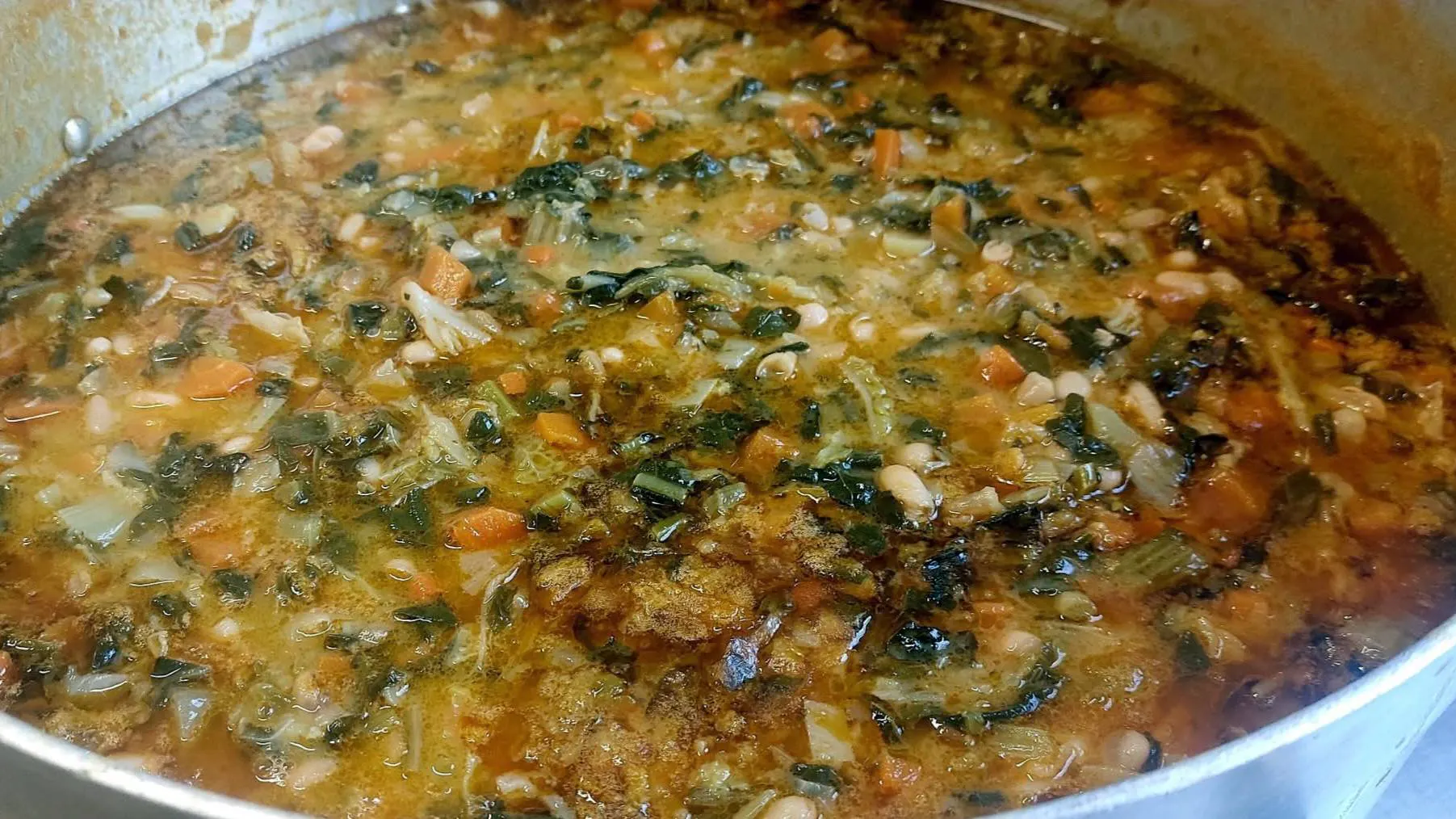
Tuscan ribollita
A traditional, flavorful soup that is perfect to enjoy the next day as well
DifficultyEasy
Preparation time1h
Cooking time4h
Servings6
€
CostLow
Ingredients
- 300 g stale Tuscan bread
- 400 g dried cannellini beans
- 300 g cavolo nero
- 150 g Savoy cabbage
- 200 g Swiss chard
- 2 small potatoes
- 3 peeled tomatoes or tomato paste
- 1 large onion
- 2 carrots
- 1 celery stalk
- Fresh rosemary to taste
- 1000 ml vegetable broth
- Extra virgin olive oil to taste
- Salt, pepper (optional) to taste
Method
- First of all, soak the beans at least 12 hours before starting the preparation.
- Once the beans have softened, drain them and boil them in plenty of water with rosemary. Finally drain the beans, keeping the cooking water, and divide them in half. Take half of the beans, blend them and set them aside (keep the remaining beans whole).
- Finely chop the onion, cut the carrots and celery into very small pieces, sauté them in a large pot with 3–4 tablespoons of oil for one minute, then add the potatoes cut into small pieces.
- Let them brown for a minute, then add the peeled tomatoes (or tomato paste), sauté for a few seconds and add the cavolo nero cut into pieces.
- Add the chopped Swiss chard and the finely sliced Savoy cabbage.
- Let it boil, then add the bean cooking water; cover with a lid and let it simmer over low heat for about 2 hours, adding from time to time some hot bean water or hot vegetable broth.
- After this time, add the bean cream. Let it cook for another 30 minutes.
- Add the whole beans, then cover with hot broth and cook over low heat for 30 minutes. Add salt to taste (at this point you can already enjoy the ribollita by adding some toasted bread).
- For the second boil, use an earthenware pot or a wide casserole. First place slices of stale bread on the bottom and pour a few ladles of soup over them. Repeat the process by adding a layer of stale bread and a layer of soup until the pot is full.
- Finally cover the container with plastic wrap (not in contact with the soup) and let the ribollita rest for at least 3 hours or until the next day.
- After the indicated time, add a couple of ladles of broth, a drizzle of oil and cook again over low heat in the earthenware pot for about 15–20 minutes: it should be nice and hot.
- Add more salt and pepper (if necessary) and serve very hot.
Rustic dishes
A selection of rustic experiences featuring dishes with bold, robust flavors. These are the humble dishes of the Italian farming tradition: simple preparations made with seasonal ingredients, yet rich in taste, appetizing, and healthy.
5.0 (71)
Food Experiences
Traditional country dishes between Tuscany and RomagnaHosted by Luisa
Pistoia
€128 per guest
Shared Experience
5 (2)
Food Experiences
Countryside Hospitality and Homemade FlavorsHosted by Alexsandra
Carpi
€92 per guest
Shared Experience
Food Experiences
Home cooking: seasonal flavors and traditionHosted by Tiziana
Rivanazzano
€49 per guest
Shared Experience
5.0 (51)
Food Experiences
Peasant recipes and flavors, between risotto and polentaHosted by Cri e Stefano
Marzana
€102 per guest
Shared Experience

Cesarine’s zero-waste recipes
Discover all the recipes that give a second life to products that would otherwise be thrown away. Prepare rustic and tasty dishes that help the environment and, why not, your wallet too!