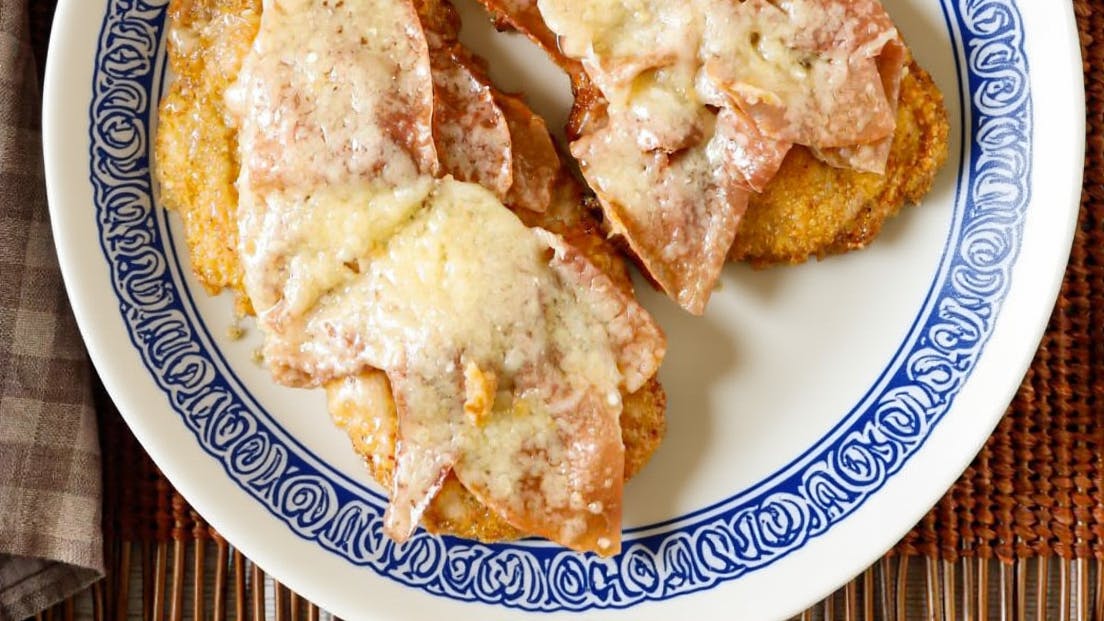
Bologna, known in Italy as “La Grassa” (“the Fat One”). There may be no better nickname to capture the essence of this city’s cuisine: rich, flavorful, hearty, and deeply satisfying. Just think of the lasagna with its meaty ragù and creamy béchamel, the tortellini with their delicate and refined fillings, or the city’s most famous cured meat, mortadella, generously tucked into sandwiches for countless lunch breaks. Yet no list of Bologna’s specialties would be complete without mentioning another dish, less known abroad but absolutely central to the city’s food culture: cotoletta alla bolognese.
Alongside the Milanese and Viennese versions, the Bolognese cutlet deserves a place of honor among Europe’s most beloved breaded veal dishes. While it is breaded and fried just like the Milanese version, the cotoletta alla bolognese differs in several key ways: it uses boneless veal (instead of bone-in like the Milanese), the cutlets are pounded thin (while the Milanese stays thick), and most importantly, it is finished with a decadent topping of Parma ham and Parmigiano Reggiano cheese. In Bologna you may also come across an even more indulgent variation, enriched with truffle shavings. This version is called the “Petroniana”, after San Petronio, the city’s patron saint.
The origins of the Cotoletta alla bolognese
Like many classic Italian dishes, tracing the origins of the Bolognese cutlet is not easy. Some claim it was already being served as early as the 1600s. What we do know for certain is that by the late 1800s Pellegrino Artusi, in his influential cookbook La scienza in cucina e l’arte di mangiar bene (“Science in the Kitchen and the Art of Eating Well”), included the recipe, both the original and a version enriched with truffle, in entries 312 and 313. In the early 20th century, the dish experienced a revival thanks to a hostess in Borgo Panigale, a neighborhood on the outskirts of Bologna, who added to her menu a dish called the “Chiccona”, based on veal, Parmigiano, and truffle.
Over the centuries, many variations of the Cotoletta alla bolognese have appeared. Some versions were served thick, bone-in, and even made with pork instead of veal. But in 2004 the Italian Academy of Cuisine formally deposited the “official” recipe with Bologna’s Chamber of Commerce, establishing a reference point for what the true Bolognese cutlet should be.
The “Amici della Petroniana”
In Bologna there is even a group of locals for whom the Cotoletta alla bolognese is more than just a dish: it is a passion. They call themselves the “Amici della Petroniana” (“Friends of the Petroniana”), a culinary association founded to promote this specialty. Since 2016, this group of men and women in their thirties and forties has been tasting versions of the dish in restaurants across the city. Each year they publish a ranking of the best Cotoletta alla bolognese, judging according to criteria such as ingredient quality, breading, and balance of flavors.
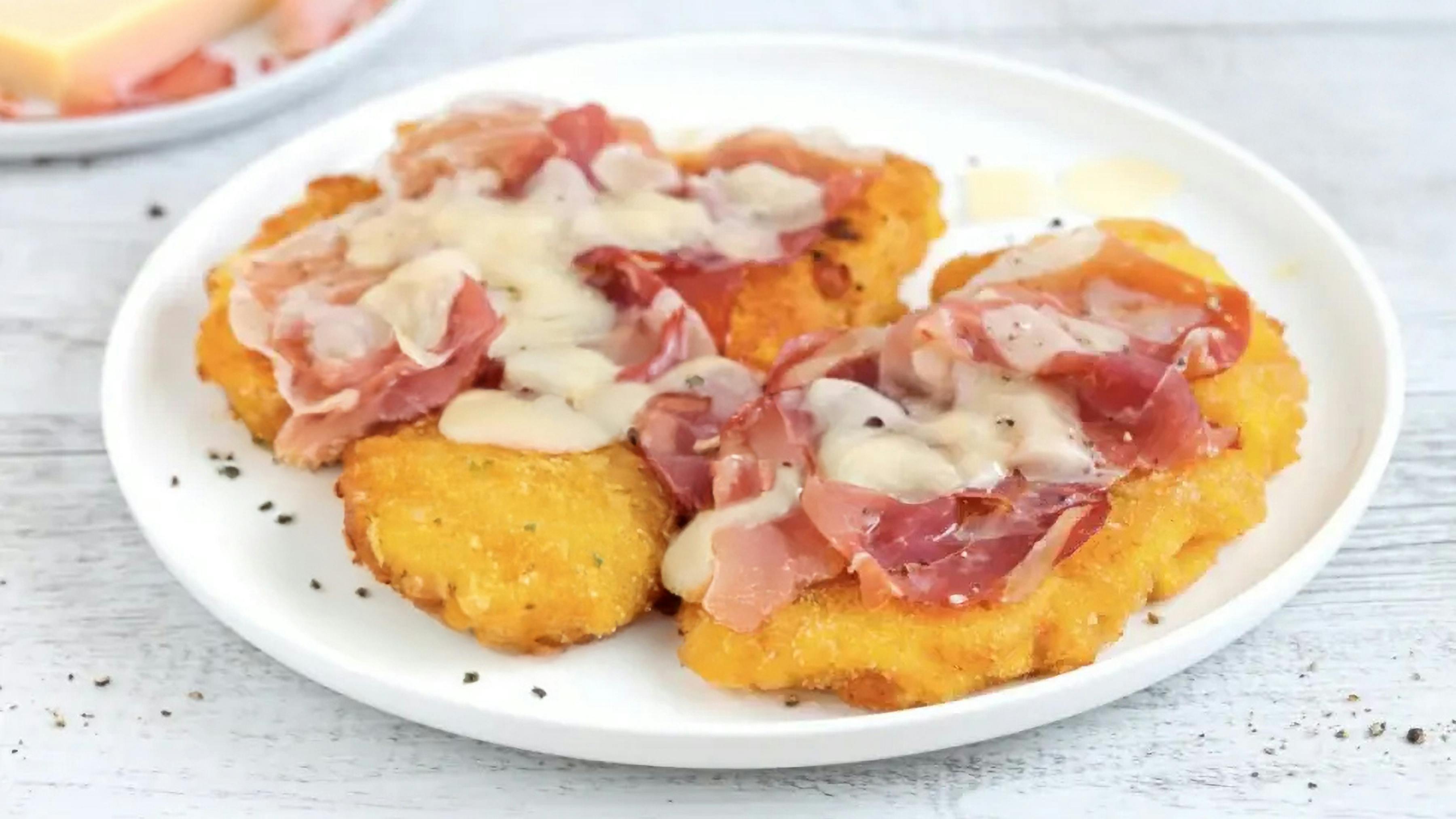
Cotoletta Bolognese
A rich and hearty main course from the Emilian tradition
DifficultyEasy
Preparation time15m
Cooking time10m
Servings6
€
CostLow
Ingredients
- 1 egg
- 1 teaspoon grated Parmigiano Reggiano
- 4 drops lemon juice
- 6 thin slices veal (pounded)
- Breadcrumbs, as needed
- 1 pat of butter
- Extra virgin olive oil, as needed
- 120 g (about 4 oz) Parmigiano Reggiano, shaved
- 6 slices Parma ham
- 1 small espresso cup of vegetable broth
- Salt, to taste
Method
- Beat the egg with salt, grated Parmigiano Reggiano, and lemon juice. Marinate the veal slices in this mixture for several hours.
- Remove the veal, one slice at a time, and coat in breadcrumbs.
- In a skillet, heat butter and olive oil in sufficient quantity for shallow frying. Fry the breaded veal slices until golden.
- Drain well on paper towels, then return them to the pan. Place a slice of Parma ham and Parmigiano shavings on top of each cutlet.
- To keep them tender, add a splash of vegetable broth, cover the skillet, and let cook over very low heat until the cheese melts. The cotolette are now ready to serve.
Side dishes to accompany the Cotoletta alla bolognese
The cutlet is delicious on its own, but if you’d like to add a side, a fresh seasonal salad works perfectly, as do sautéed mushrooms, roasted or fried potatoes, or creamy mashed potatoes. For a truly Bolognese pairing, try it with friggione, a traditional onion and tomato side dish.
Parma Ham: a thousand-year history
The history of Prosciutto di Parma stretches back over two thousand years. In the 1st century BC, the Roman writer Marcus Terentius Varro, in his treatise De Re Rustica, described the people of the Po Valley as expert pork processors who exported hams and whole cuts of pork to Rome. Other ancient authors, including Polybius, Strabo, and Cato the Elder, confirmed this reputation.
An inscription preserved in the Capitoline Museums in Rome lists perna (ham) among the dishes of the day, alongside pullum (chicken) and piscem (fish). Later, the Lombards were known for their heavy consumption of wild boar and pork, which they salted and preserved as ham, lard, and cured meats. They had easy access to salt thanks to natural saline springs in Salsomaggiore, near Parma. It was here, in this region, that Prosciutto di Parma was born, a product still famous today throughout Italy and the world.

Cooking Classes in Bologna
Discover the best cooking classes in Bologna, the culinary heart of Italy, where rich flavors and time-honored traditions come alive. Learn to create iconic dishes like tagliatelle al ragù, the famed Bolognese sauce that has delighted palates for generations. Set against the backdrop of Bologna’s historic streets and vibrant markets, each class is a delightful journey through the art of Italian cooking. You’ll master the techniques of making fresh pasta from scratch and explore local specialties like tortellini. Whether you’re a beginner or a seasoned cook, these hands-on classes will ignite your passion for Italian cuisine and leave you with lasting memories—and delicious recipes—to share with loved ones!
Cooking classes
Gnocchi lesson with Cesarina LauraHosted by Laura
Bologna
€143 per guest
Shared Experience
Cooking classes
A journey through the traditional flavors of BolognaHosted by Claudia
Bologna
€123 per guest
Shared Experience
5 (113)
Cooking classes
Artisanal Gelato in Bologna: Masterclass with TastingHosted by Roberta
Bologna
€123 per guest
Shared Experience
Typical experience
5 (113)
Cooking classes
Italian aperitivo: five appetizers and proseccoHosted by Roberta
Bologna
€133 per guest
Shared Experience