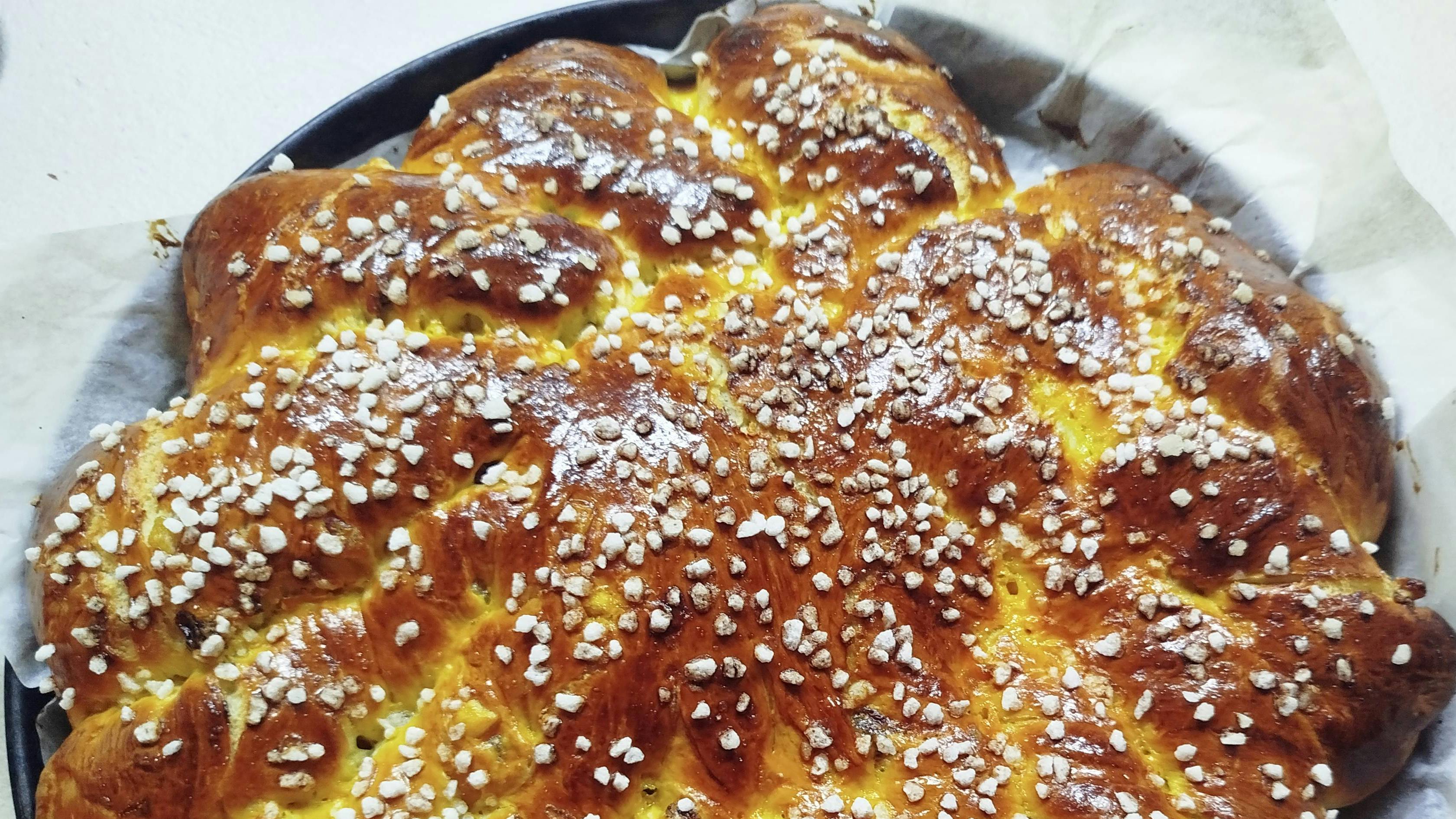
We’re reluctantly approaching the end of the holiday season, and what better way to comfort ourselves than with a simple, easy-to-make, and absolutely delicious treat: the Focaccia della Befana. As the name suggests, this sweet bread is traditionally prepared for January 6th, the day of the Epiphany. Typical of the Cuneo area in Piedmont, the fugassa d’la befana is a lightly sweet brioche-style bread made with flour, milk, eggs, butter, raisins, and candied fruit.
Its origins are very old: some say it even predates other festive desserts like panettone or colomba. As with many traditional recipes, there are several variations of the Focaccia della Befana, but a few features remain constant: its shape, which resembles a sun or a daisy; its soft, fragrant dough; and its inviting aroma that fills the kitchen. This leavened cake is perfect for breakfast or as an afternoon snack with tea or, since it’s the season, while everyone gathers to open the stockings left by the Befana.
Storage
Once baked, it can be stored for up to five days if wrapped tightly in plastic wrap.
The sweet with a surprise
What makes Focaccia della Befana truly unique is the hidden surprise baked inside. It could be a coin, symbolizing luck and prosperity: the finder will have good fortune all year. Or it might be a white and a black bean: the one who finds the white bean must pay for the cake, while the one who gets the black bean buys drinks for everyone. Sometimes, a tiny figurine of a king is hidden inside, and whoever finds it becomes the “ruler” for the day. In this way, the Focaccia della Befana is similar to the French Galette des Rois or the Spanish Roscón de Reyes.
The Focaccia della Befana Recipe
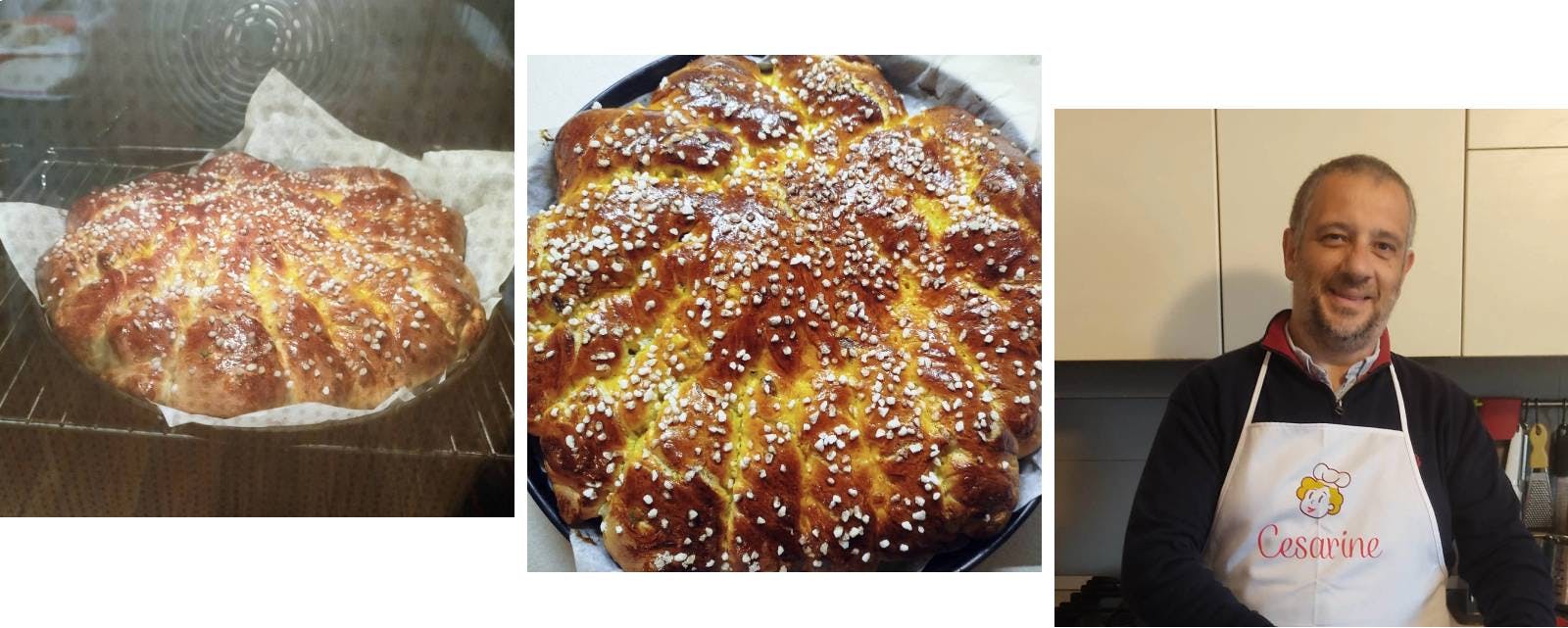
Feeling inspired to bake this festive treat? Here’s the simple and traditional recipe shared by our Cesarino Domenico from Castiglione Torinese:
“In our family, whoever finds the bean doesn’t have to buy drinks like in the old custom, but instead gets to choose the games we’ll play on Epiphany afternoon”.
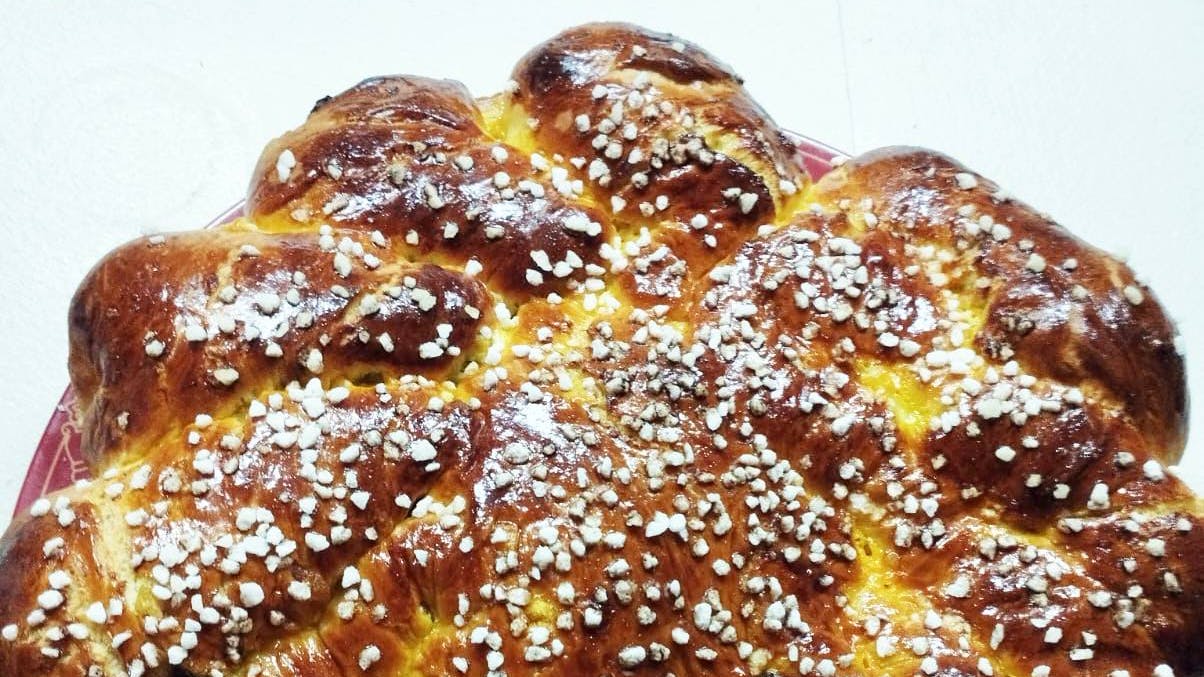
Focaccia della Befana
The traditional Piedmontese Epiphany cake with candied fruit, raisins, and a lucky surprise
DifficultyMedium
Preparation time9h
Cooking time25m
Servings8
€
CostLow
Ingredients
- 500 g (4 cups) Manitoba flour
- 20 g (¾ oz) fresh yeast
- 1 egg
- 200 g (¾ cup + 1 tbsp) milk
- 150 g (¾ cup) sugar
- 100 g (7 tbsp) butter
- 100 g (½ cup) candied fruit
- 50 g (⅓ cup) raisins
- 1 vanilla bean
- 1 dried fava bean
For brushing:- 1 egg yolk
- 1 teaspoon milk
For decoration:- Sugar crystals
Method
- Place the flour in a large bowl.
- Dissolve the yeast in lukewarm milk and pour it into the flour, then start mixing.
- Soak the raisins in warm water.
- Add the egg, sugar, and vanilla seeds to the dough, and continue kneading.
- Add the softened butter, then mix in the candied fruit and well-drained raisins.
- Knead until smooth and elastic, cover with plastic wrap, and let rise overnight (or at least 5–6 hours in the oven with the light on).
- Once risen, transfer the dough to a round 12-inch baking pan lined with parchment paper. Gently spread it out, then cut and twist sections to create petal-like shapes and hide the fava bean inside one of them.
- Brush the surface with the egg yolk and milk mixture, sprinkle with sugar crystals, and let rest for about 30 minutes.
- Bake at 350°F (180°C) for 20–25 minutes.
Winter Experiences
This winter, immerse yourself in the season’s most delightful culinary experiences. From heartwarming dishes to cozy cooking workshops, these activities bring the best of winter's flavors right to your table.
Local food
5 (11)
Food experiences
Bagna cauda experience: tradition and convivialityHosted by Fabiana e Andrea
Asti
€51 per guest
Shared Experience
4.8 (20)
Food experiences
Winter menu in the vicinity of the Orobian Pre-AlpsHosted by Laura
Paladina
€82 per guest
Shared Experience
Cooking classes
Winter flavors: cooking class with traditional dishesHosted by Benedetta
Florence
€70 per guest
Shared Experience
5 (2)
Food experiences
Winter journey into the authentic flavors of Emilian cuisineHosted by Chiara
Reggiolo
€72 per guest
Shared Experience