Food has long been an inexhaustible source of artistic inspiration. Throughout history, it has played a very special role in artworks of all eras, from prehistoric hunting scenes to Pompeian and Byzantine mosaics. Prehistoric depictions of food were linked to rituals aimed at Mother Nature to ensure a fruitful hunt.
In contrast, in Pompeian times, food was used as a symbol of a “welcome gift” for guests. Figs, nuts, pears, cherries, grapes, honey, cheeses, game, bread, and wine were painted directly on the walls.
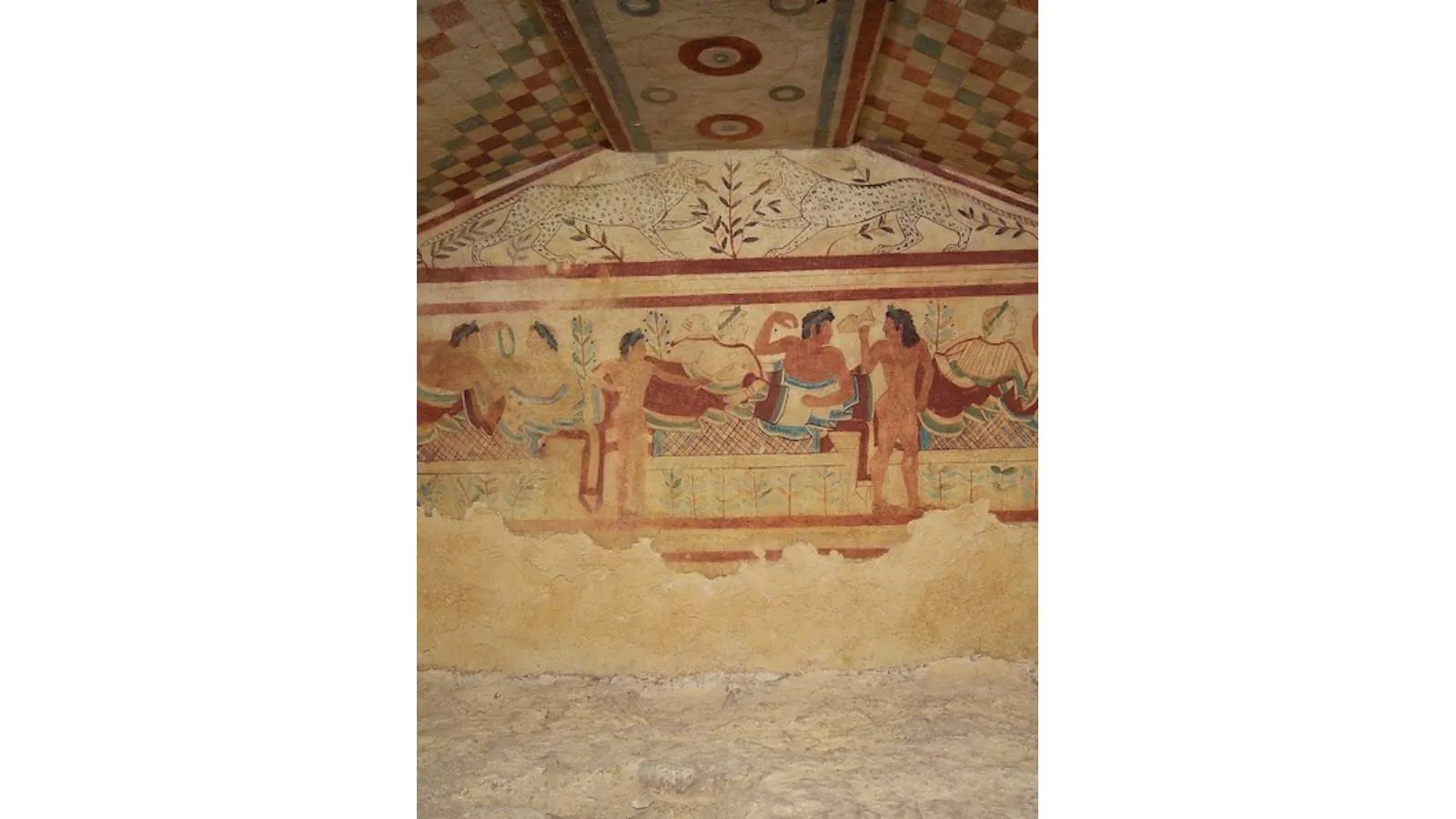
Another example of the food-art connection comes from the Etruscans, who introduced depictions of banquets, such as the fresco in the Tomb of the Leopards (Tarquinia), which shows a man dining with a cup of wine in his left hand and an egg in his right, symbolizing the continuity of life through rebirth. Etruscan tombs perfectly recreated the environment in which the deceased had lived, including kitchen tools and utensils. For example, we know about the use of forks and strainers.
The concept of the banquet was strongly taken up by Roman society, especially during the Imperial period. The symbolism of the banquet is a clear reference to the importance of enjoying life’s pleasures. Clear examples include Lucullus, Nero, and Trimalchio in Petronius’ Satyricon.
During the Christian period, banquets naturally took on different connotations, such as the depiction of loaves and fishes in the Catacombs of San Callisto, which relate to two of the most iconic Biblical symbols, or the frescoes in the Roman Catacombs of Saints Marcellinus and Peter, which highlight another Biblical element: wine.
The perception of banquets changed radically during the Middle Ages, when food, besides being considered a gift from God, was seen as the result of hard work, leading to depictions of agricultural scenes and the transformation of raw materials.
During the Renaissance and Baroque periods, food became the protagonist of paintings, especially in still lifes: it was once again represented as an aesthetic model, full of color, variety, and balance of forms. As mentioned earlier, the “banquet” was a very frequent subject in artistic representations, both sacred and secular.
- The Last Supper – Dario of Pordenone
This work, housed in the Church of San Gregorio in Treviso, depicts Christ facing four threatening shrimp. This theme appears in more than 150 paintings and represents “sacrifice” (because of the red color taken during cooking) and rebirth (as the shell renews with each season).
- The Last Supper – Giotto
In the magnificent Scrovegni Chapel in Padua, one can admire Giotto’s work, where the table is barely visible, and the figures turn their backs on the viewer. The food is almost absent, yet the piece anticipates modern achievements in perspective.
- The Last Supper – Leonardo da Vinci
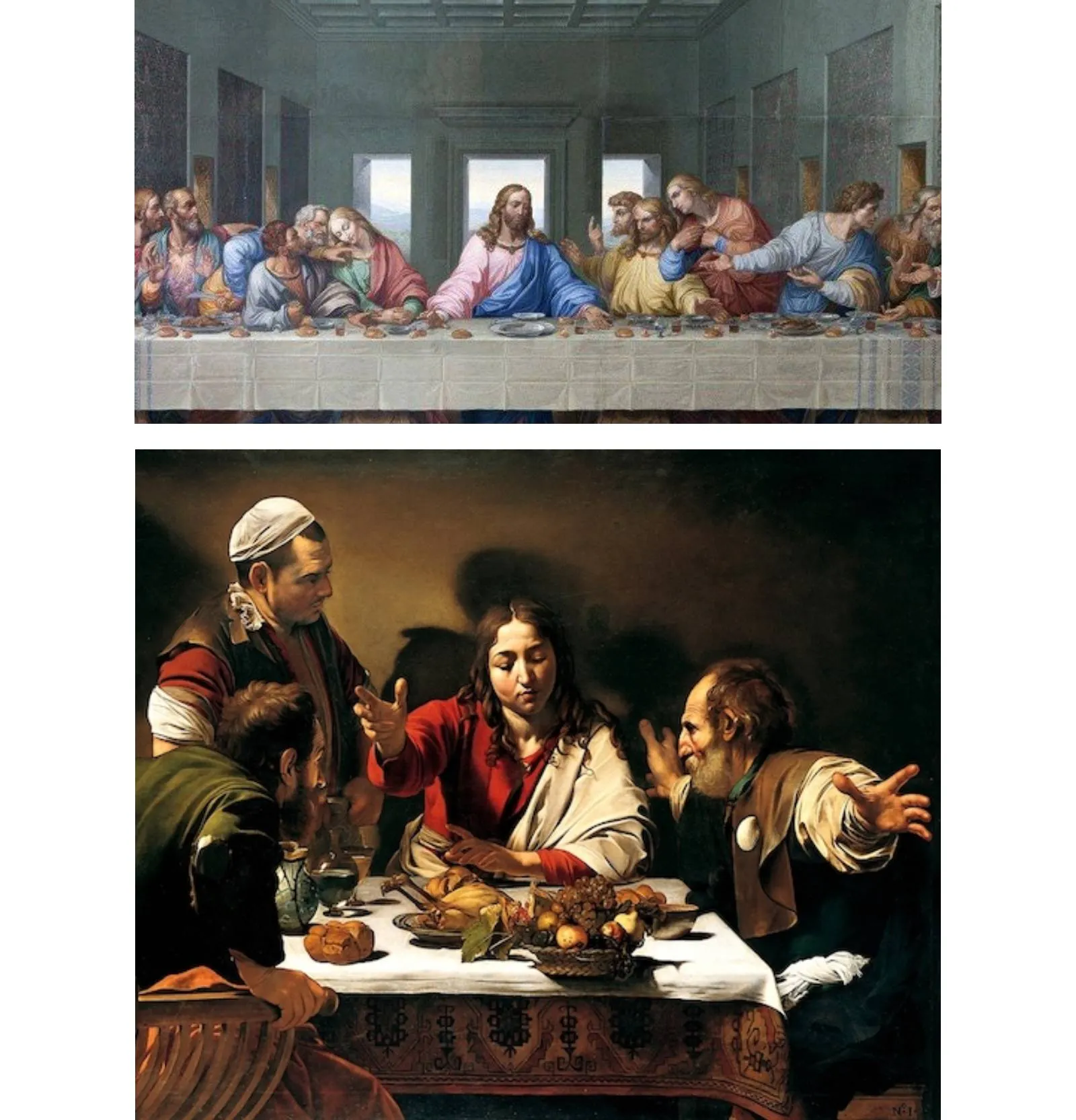
Unlike Giotto, Leonardo places all the protagonists facing the viewer, highlighting their gestures and expressions. The incredible attention to the table details—plates, half-filled glasses, numerous loaves of bread, folds of the tablecloth—is remarkable. The detail of Judas knocking over the salt cellar is an explicit reference to the Gospel of Matthew: “You are the salt of the earth,” as Jesus defines the apostles. Judas wasted the chance to become it, symbolized by the spilled salt.
- The Last Supper – Tintoretto
Completely different is Tintoretto’s Last Supper in the Church of San Giorgio Maggiore in Venice. The scene takes place in a typical Venetian tavern, portraying a Jewish Passover banquet with lamb, wild lettuce broth, and unleavened bread. The table is viewed from above at an angle, in darkness, with three light sources creating strong chiaroscuro contrasts. One source comes from Christ, breaking and distributing the bread.
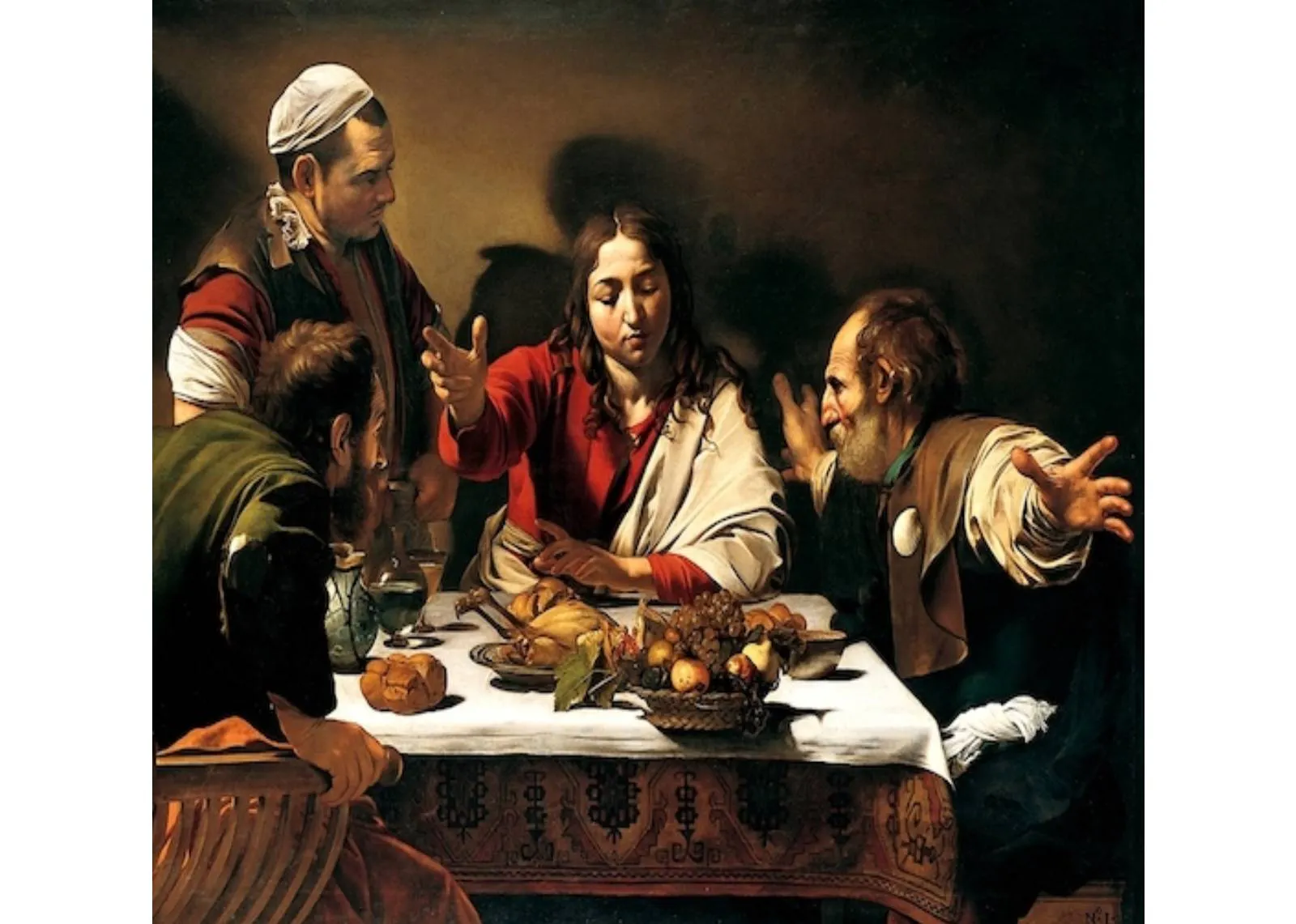
- Supper at Emmaus – Caravaggio
This Baroque masterpiece is a triumph of abundance in both food and table arrangement. Each item carries symbolic meaning: chicken represents death, bread and wine represent life, pomegranate represents resurrection, black grapes indicate death, white grapes indicate life, and the fish (drawn in the basket’s shadow) represents Christ.
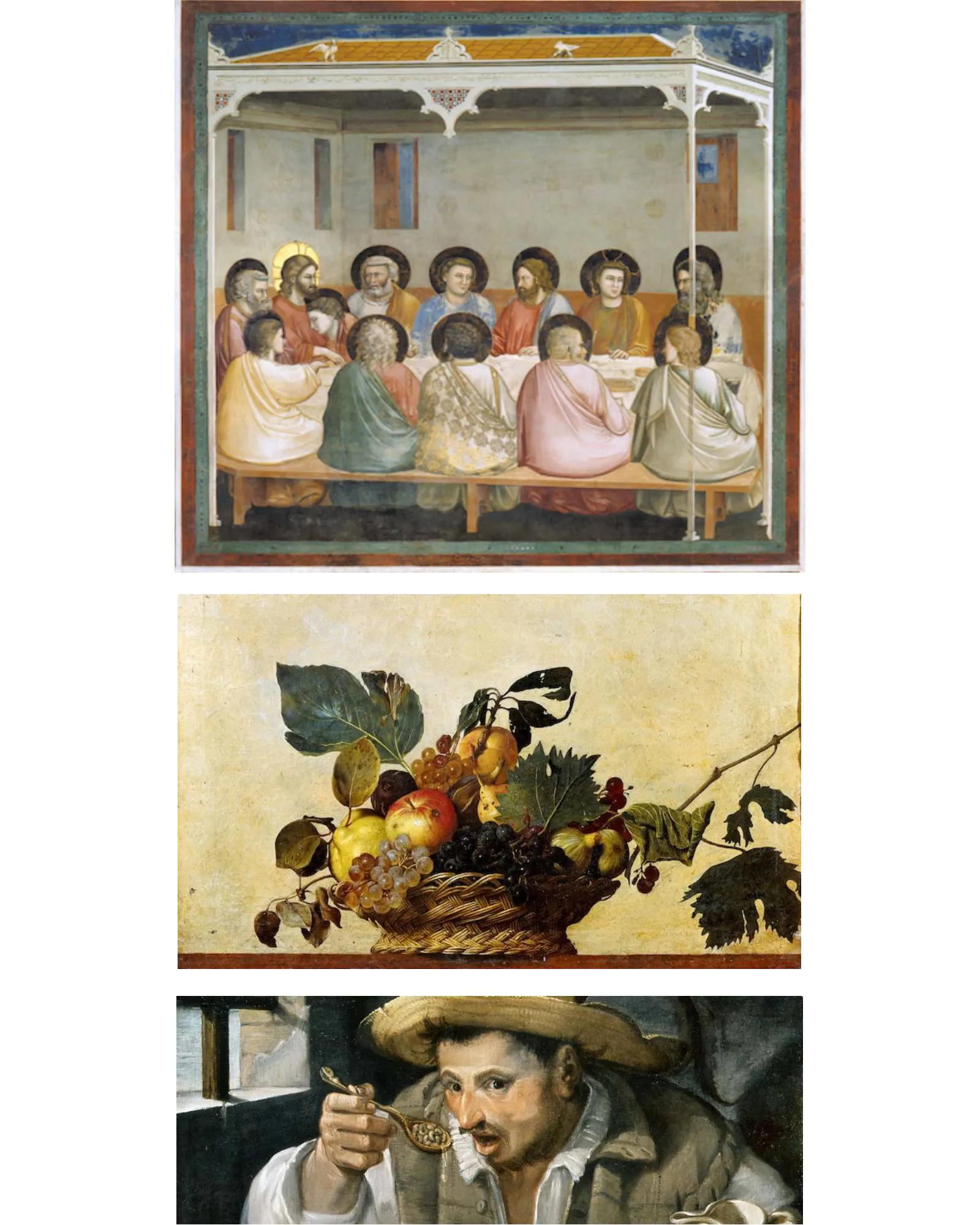
Caravaggio also pioneered genre painting, particularly still life. There is no difference between painting flowers or figures; still life in his work is linked to the concept of death: the presence of things in the absence of man. The surviving fruit basket is viewed from below, creating a three-dimensional effect against an unusually bright, flat background. Every detail is captured with cold objectivity: transparent grapes, rough fig skin, smooth shiny apples, even a blemish and wilted, curled leaves, symbolizing the “vanitas” of human existence.
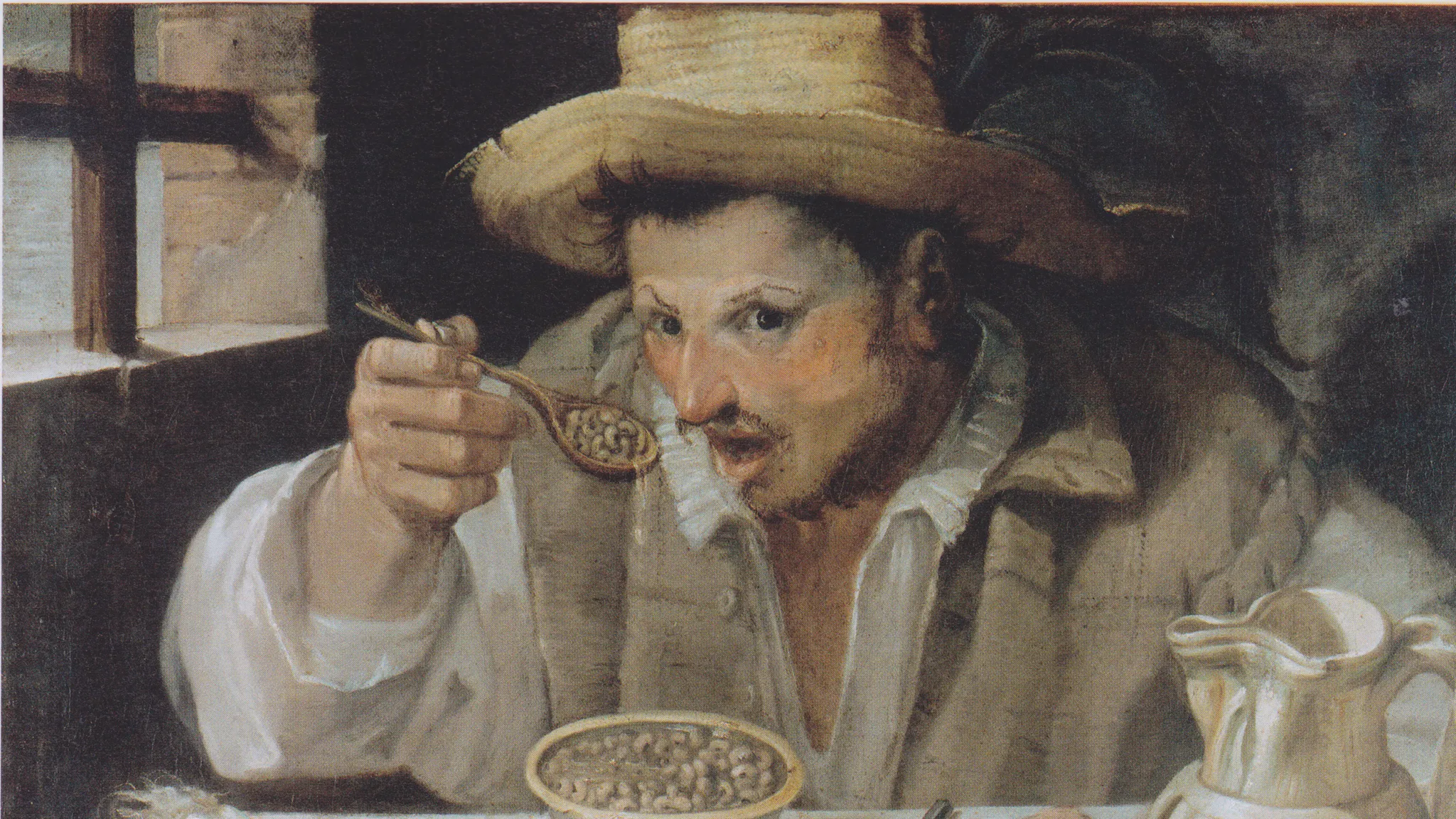
Certainly, this journey cannot ignore two iconic depictions of food: The Bean Eater by Annibale Carracci and Supper at Emmaus by Francesco Barbieri, known as Guercino. In these works, the loaves of bread are depicted just as bakers in Ferrara have produced them for centuries. The fish presented to the diners are simply mussels abundant in the brackish waters of the Po Delta, prepared by fishermen with oil and garlic. On that white tablecloth, all aspects of 17th-century Emilian culture are condensed.

Cooking classes on traditional Italian dishes
Do you want to embark on an authentic culinary journey from north to south, discovering the flavors and traditional dishes of the Bel Paese? With Cesarine's cooking classes, you can learn how to make homemade fresh pasta, uncover the secrets to creating perfect Sicilian street food, have fun crafting a delicious tiramisu, and make an irresistible Neapolitan pizza. These will be unforgettable experiences, accompanied by warm hospitality that will make you feel right at home. All that's left is to book the class that's right for you!
Local food
5 (6)
Cooking Classes
Saffron Risotto and Ossobuco Masterclass in a Milanese homeHosted by Nicoletta e Fabio
Milan
€169 per guest
Private Experience
Local food
5.0 (40)
Cooking Classes
Fresh pasta course in Turin: agnolotti piemontesiHosted by Iva
Moncalieri
€133 per guest
Shared Experience
Local food
5 (1)
Cooking Classes
Border cuisine: authentic flavors of GoriziaHosted by Manuela
Gorizia
€125 per guest
Shared Experience
Local food
5 (20)
Cooking Classes
Fresh Piedmontese pasta: agnolotti al plin and tajarinHosted by Teresa
Pocapaglia
€153 per guest
Shared Experience