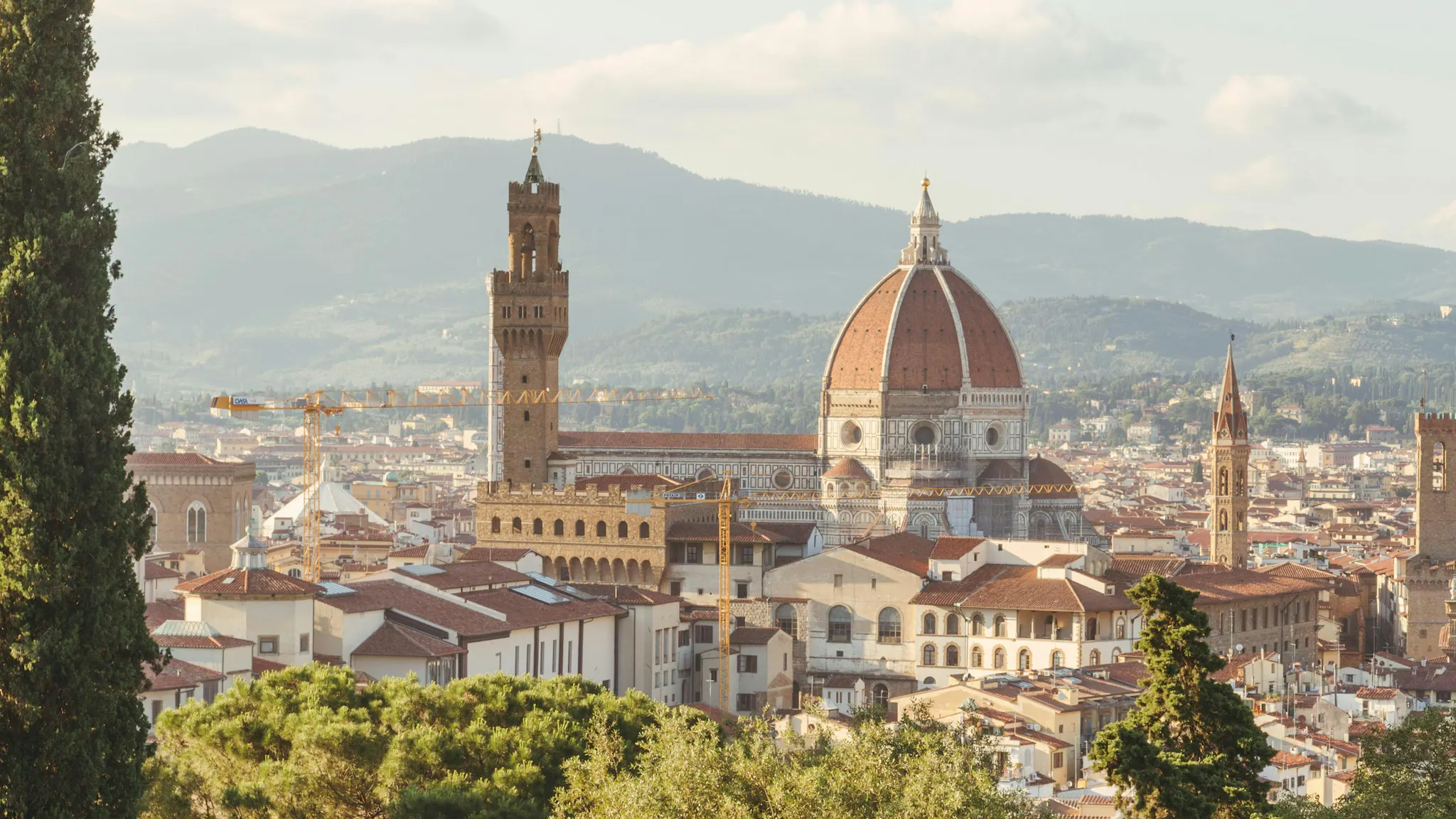
Tuscany is famous worldwide for its breathtaking landscapes: rolling hills covered with vineyards and olive groves, winding roads lined with cypress trees, and postcard-perfect medieval villages. These charming towns have attracted actors and celebrities from around the globe, who have chosen them as second homes.
Tuscany is one of Italy’s most renowned and visited regions, a crossroads of international tourism that draws visitors from all over the world each year. But Tuscany, and its capital Florence, is not only celebrated for its scenic and artistic beauty; it is equally renowned for its culinary specialties.
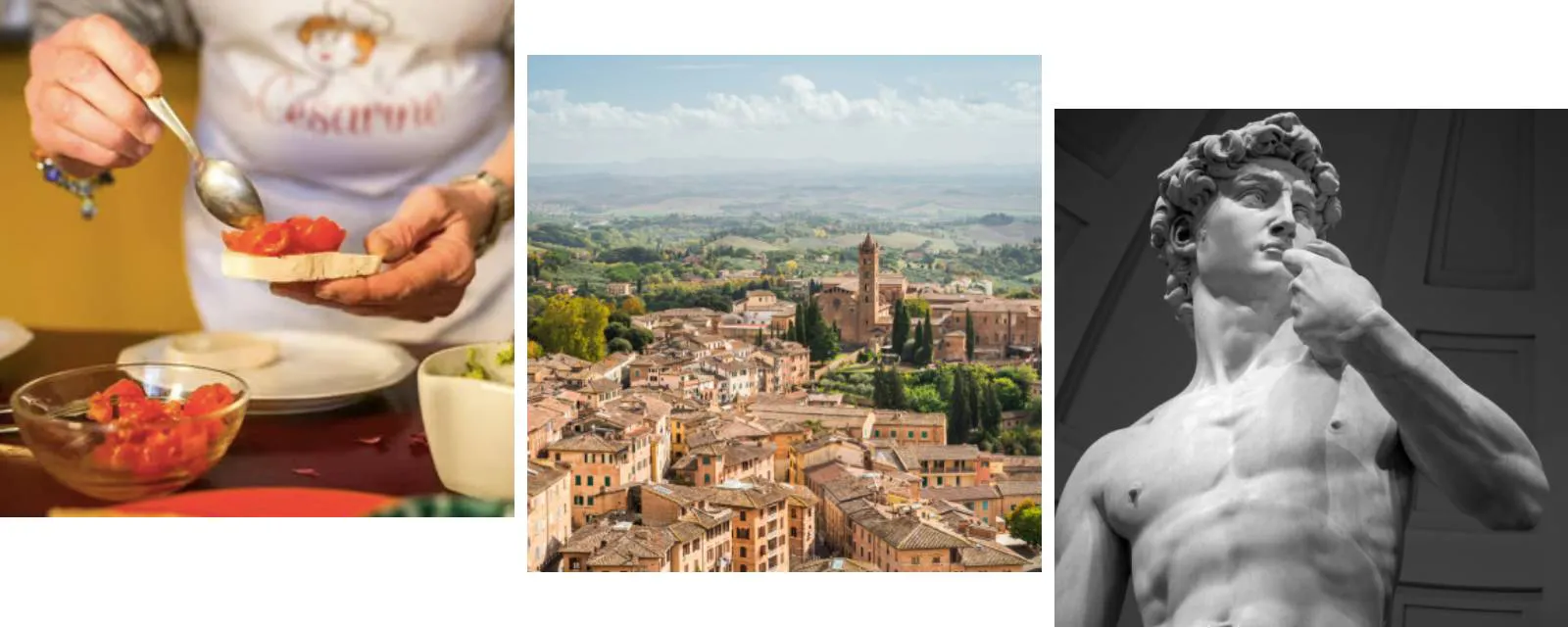
Tuscan Cuisine
If we were to summarize Tuscan cuisine in a few words, we could describe it as a balance of contrasts: rustic yet refined, simple yet sophisticated. Dishes are prepared using few ingredients and follow the rhythm of the seasons to ensure the highest quality of raw materials. Only this approach can create what one observer accompanying King Victor Emmanuel II once called “a peasant cuisine fit for a king’s table”.
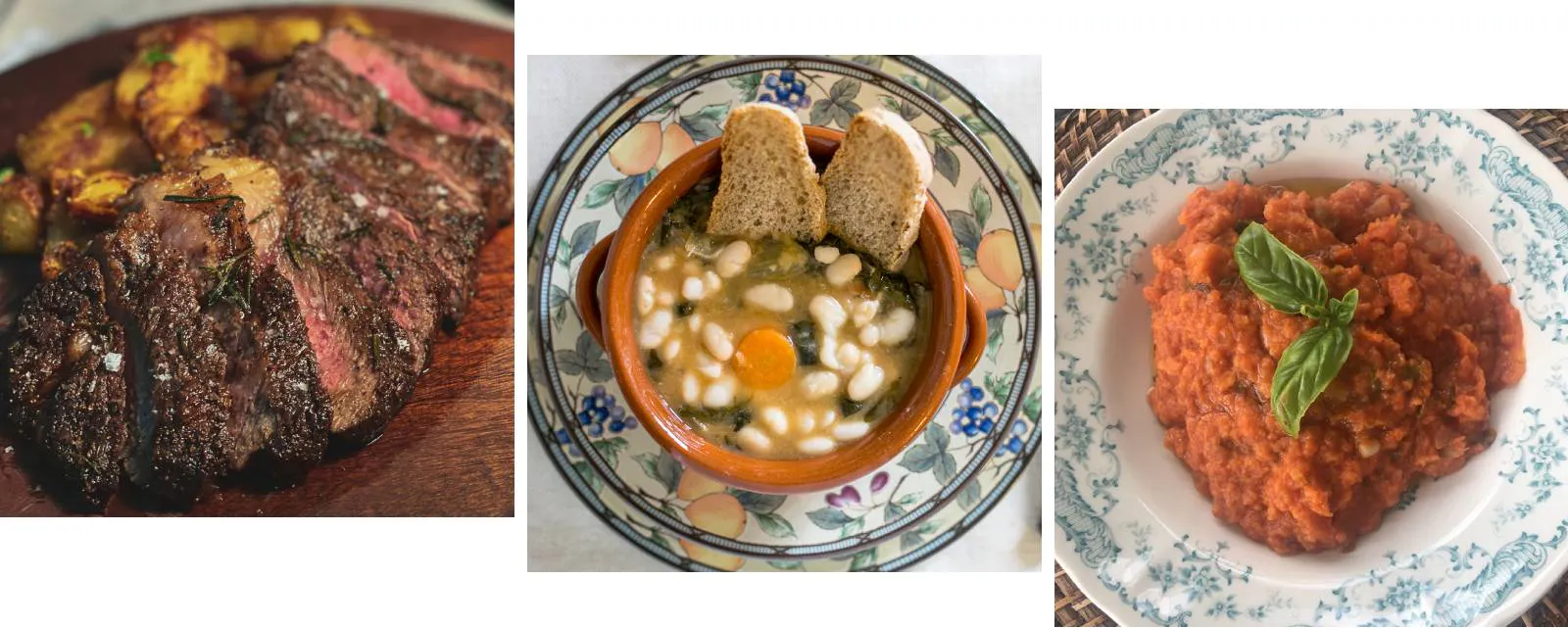
Tuscan food is generous and flavorful. Dishes are rich in taste, seasoned with garlic, onion, sage, and spices like pepper, and feature white meats, game, and cheeses. It is also convivial, with abundant portions designed to be shared with family and friends, and diverse, alternating between land and sea: from the famous Bistecca alla Fiorentina to pappa al pomodoro and cacciucco.
Tuscan cuisine is also an excellent example of culinary ingenuity and resourcefulness, where the creativity of housewives has transformed leftovers into refined dishes. Leftover meat becomes savory meatballs, leftover pasta is baked into pasticci al forno, and stale bread finds new life in panzanelle and ribollita.

Strolling through Florence’s markets and artisan shops
Florence isn’t just about breathtaking landscapes and monuments — the Tuscan capital also boasts a vibrant culinary scene. Discover the most authentic side of Florence with a Cesarine tour: explore traditional shops and historic markets like the Mercato Centrale di San Lorenzo, the Mercato Nuovo, and the Mercato di Sant’Ambrogio.
5 (11)
Food & Wine Tours
Market tour & cooking classHosted by Barbara
Florence
€184 per guest
Shared Experience
Food & Wine Tours
Discover Florence one bite after another - walking food tourHosted by Francesco
Florence
€184 per guest
Shared Experience
5 (127)
Food & Wine Tours
Cooking class with shopping at Sant’Ambrogio marketHosted by Carlo
Florence
€189 per guest
Private Experience
5 (10)
Food & Wine Tours
Street Food Tour in Florence tasting good specialityHosted by Barbara
Florence
€128 per guest
Shared Experience
The Origins of Tuscan Cuisine: From the Etruscans to the Renaissance
Modern Tuscan cuisine is the result of centuries of layered culinary traditions. Its origins are ancient, dating back to the Etruscans, the civilization that inhabited the area of present-day Tuscany. Etruscan cuisine was simple, based on ingredients such as beans, grains, sheep meat, fruits, and vegetables, and some of their dishes survive today, like farro soup.
The Romans inherited the Etruscan culinary heritage and blended it with their own traditions. Roman influence is particularly evident in farming and food preservation techniques and in eating habits, with Roman frugalitas becoming a model to emulate. As the Republic transitioned into the Empire, increased contact with other peoples introduced previously unknown ingredients to Roman tables. Dishes lost their simplicity and became stages for culinary extravagance; critics of the time viewed these excesses as a reflection of a corrupt society and looked nostalgically at the old frugalitas.
With the fall of the Roman Empire and the beginning of the Middle Ages, food became a marker of social distinction between rich and poor. The use of Oriental spices and aromatic herbs spread, and many dishes originating in this period, such as ribollita, are still enjoyed today.
During the Renaissance, Tuscan cuisine reached its peak of refinement. Florence became the first city to adopt the use of the fork, and the Medici family astonished guests with lavish banquets featuring exotic products imported from the Americas, such as potatoes and tomatoes, which were still considered inedible in other regions. Tuscan culinary influence even crossed the Alps: through the marriage of Catherine de’ Medici to Henry II of France, Tuscan flavors inspired new creations in French cuisine, leaving a lasting mark on European gastronomy.
Cooking and culinary experiences with Cesarine in Siena and surroundings
Beyond Florence, Tuscany is home to many other gems worth visiting. From Siena and Arezzo to San Gimignano, you can enjoy numerous Cesarine culinary experiences that let you discover the region’s most authentic traditions. Book your experience now and savor traditional dishes or learn new cooking techniques in a fun, hands-on cooking class!
Partner Offer
Food & Wine Tours
Siena: a journey through history with wine tastingHosted by La Torre alle Tolfe
Siena
€55 per guest
Shared Experience
5 (9)
Food Experiences
Traditional Tuscan menu, straight from my garden Hosted by Genny
Rapolano Terme
€122 per guest
Private Experience
4.9 (30)
Food Experiences
Aperitivo Experience: tasting in the Tuscan hillsHosted by Lara
Certaldo
€122 per guest
Private Experience
Cooking Classes
Pici and Cantucci among the rolling hills of Val d'OrciaHosted by Martina
Pienza
€126 per guest
Shared Experience
Typical Tuscan Recipes
Discover the traditional recipes of Tuscany and bring the authentic flavors of the region to your table!